workshop
stool
Research & Strategy
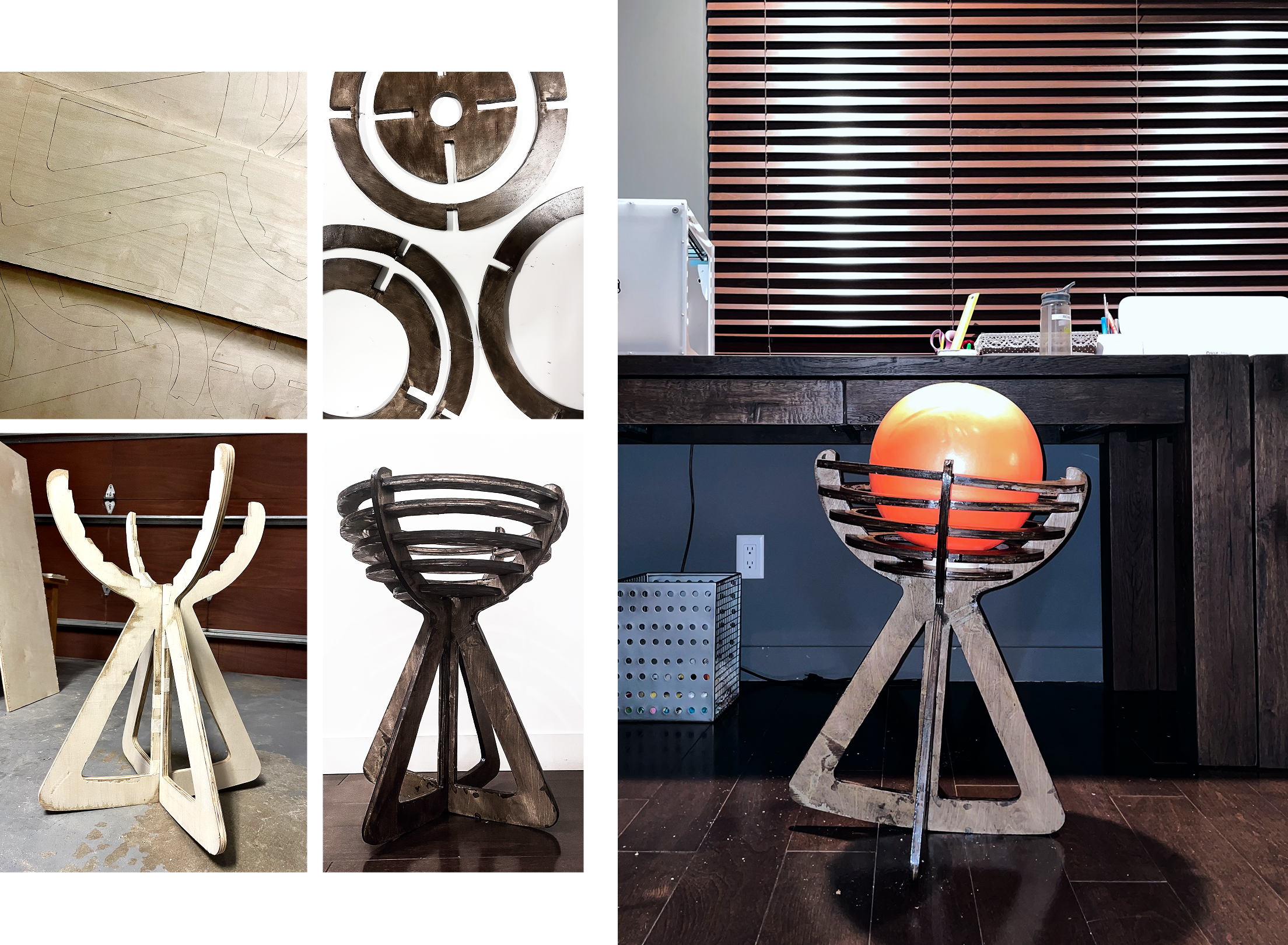
Physical Prototyping
*Prototyped with limited materials & tools, during COVID.
1
Research
target users
Makers who spend time sitting in a workshop, studio, or lab.
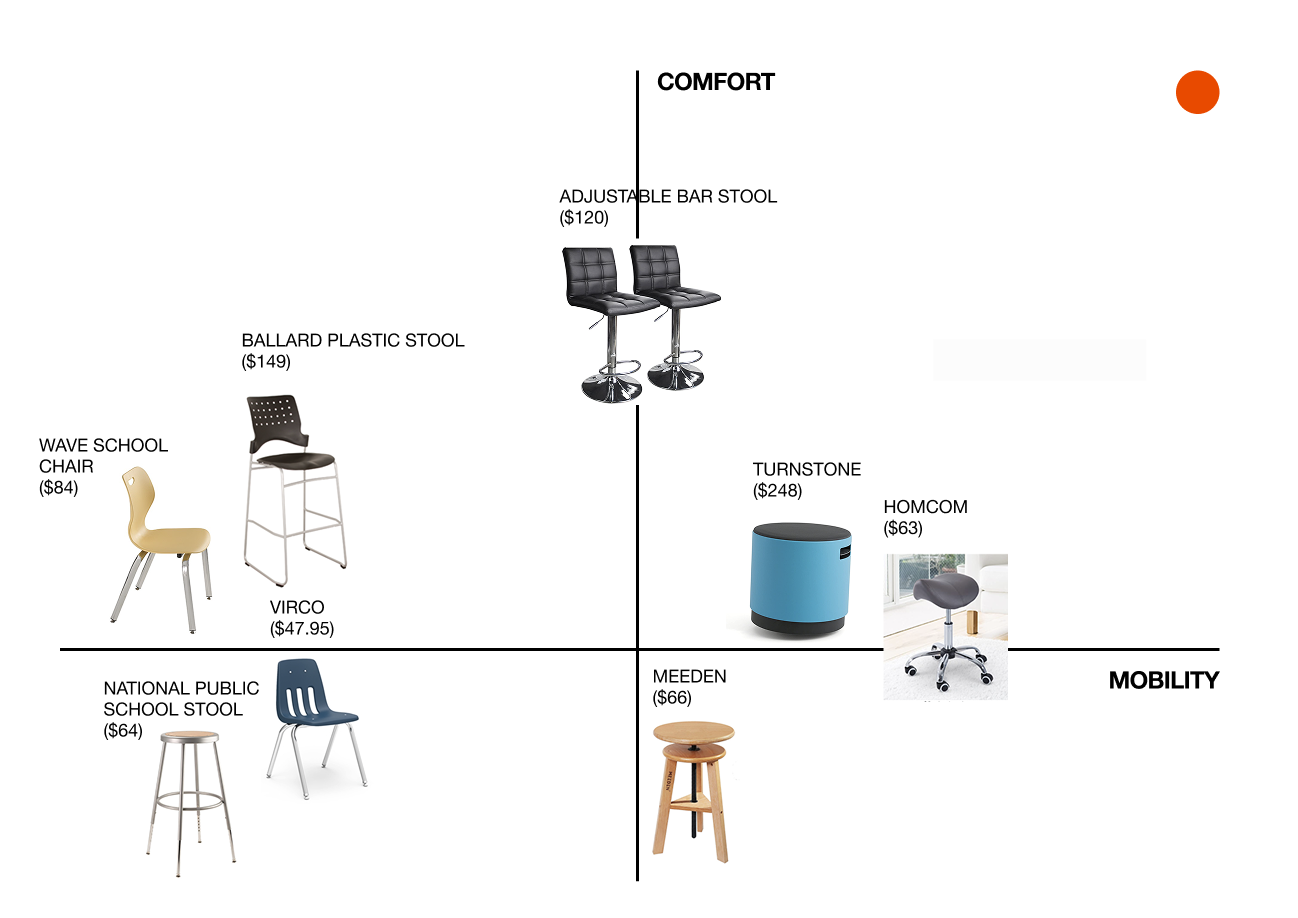
key pain points
Uncomfortable.
Lack of support for body.
Restricts movement around space.
Not adaptable to various user needs.
physical restriction & discomfort are enemies to creative work.
There is an opportunity for workshop seating that supports makers through extended periods of focused work, while empowering freedom of mobility.
While we’re at it, let’s also consider portability, accessibility, and affordability.
2
Ideation
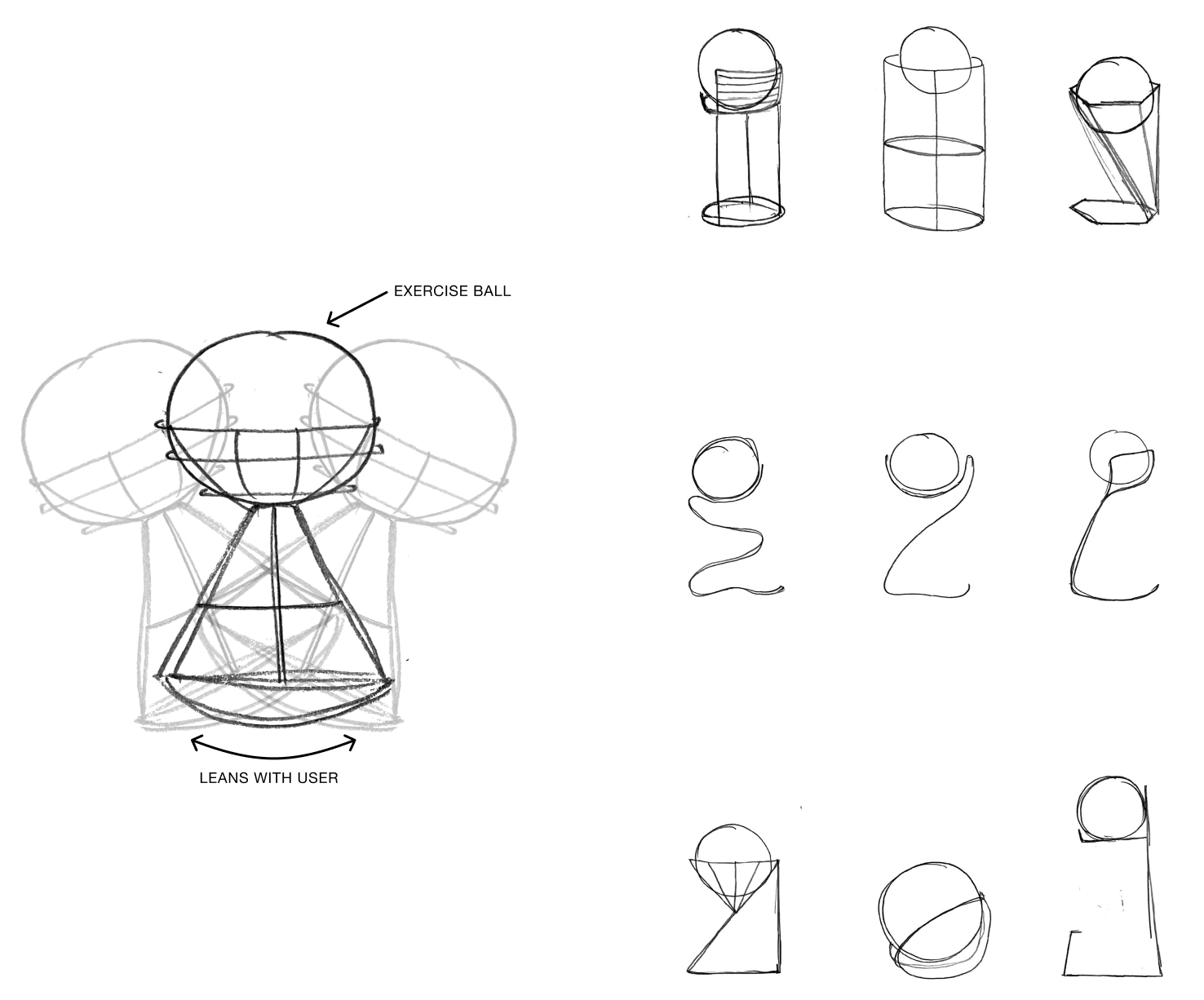
How might we encourage movement while sitting?
What if the seating leans based on the user's movements, so they never have to get up?
What if the seating moves with the user around the space?
What if the seating allows the user to rotate 360 degrees?
how might we eliminate the negative health effects of long-term sitting?
What if we incorporate aspects of fidgeting/exercising for the otherwise static body parts?
What if the seating molds to a user's body based on their sitting position?
What if the seating provides haptic feedback to improve the user's posture?
how might we invite a user to sit but also encourage them to stand up?
What if the seating is bouncy so it is easy to stand up?
What if the seating has a softer material than typical lab stool metal/wood?
What if the seating offers feedback based on how long the user has been sitting?
3

3d model
4
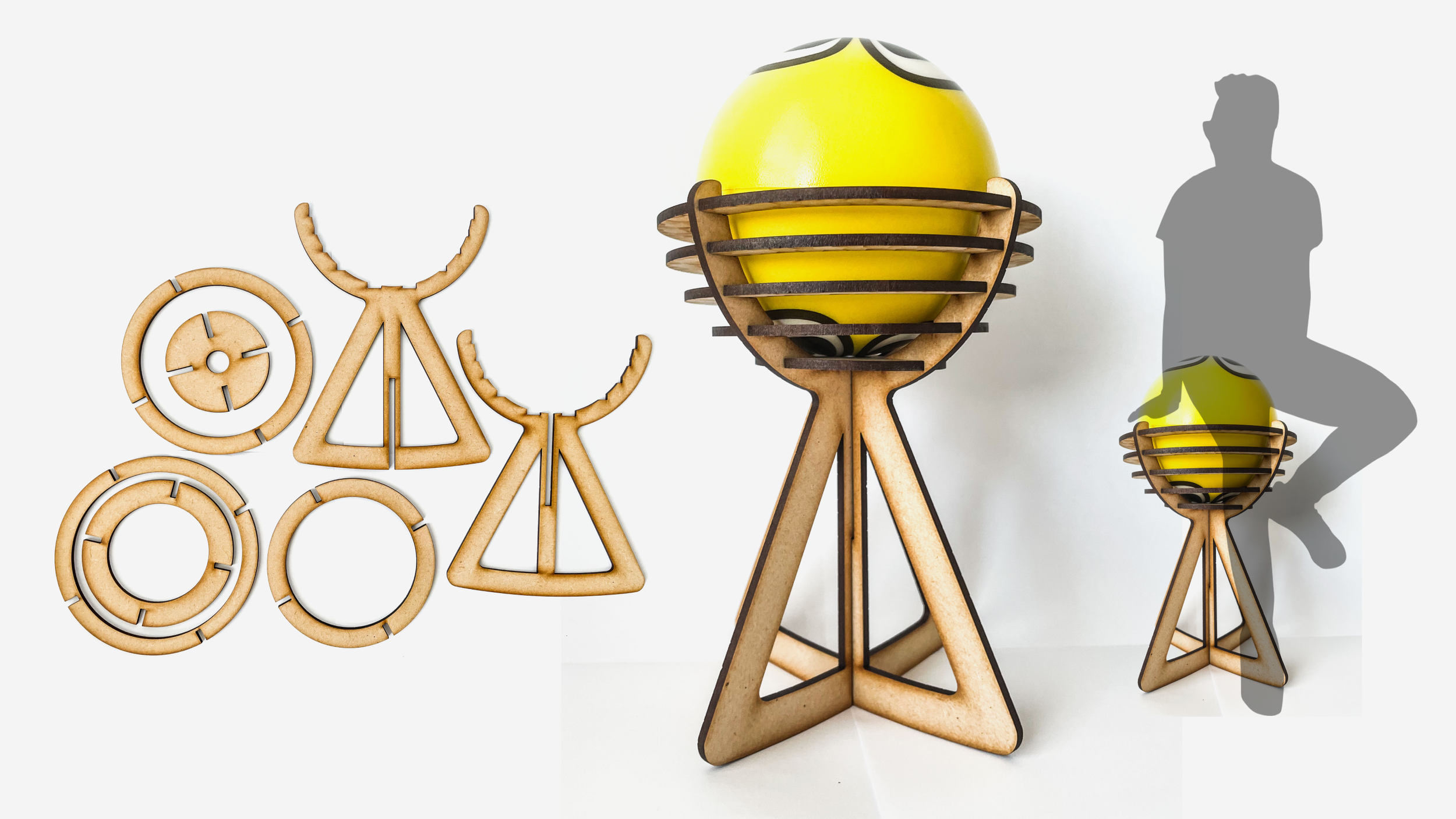
LOW-RES PROTOTYPE
1/4 Scale
Material: MDF
Laser Cut

MID-res prototype
5
Full-Scale Build
Material: Plywood
Scroll Saw