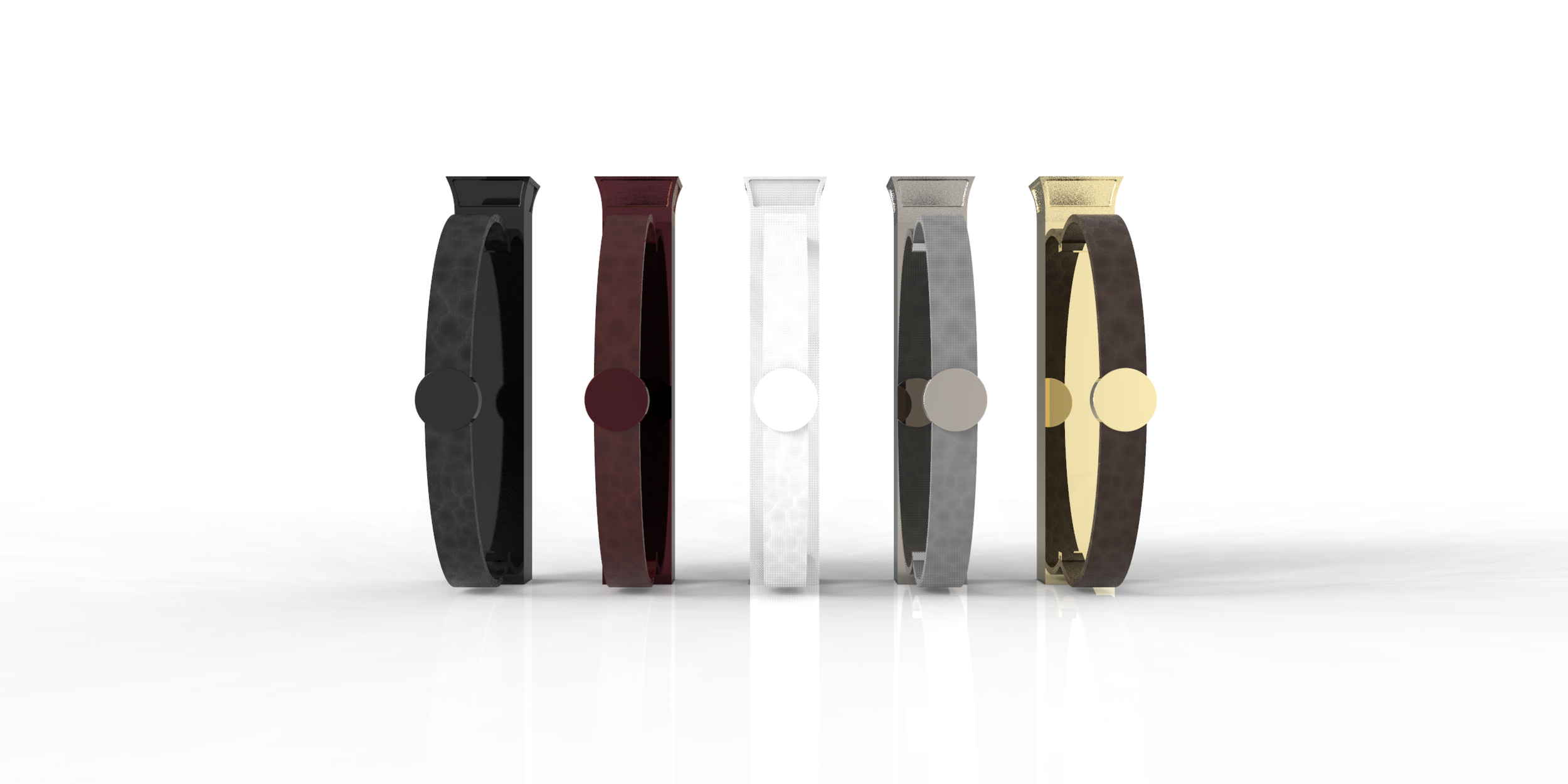
Research & Strategy
Physical Prototyping
3D Modeling
*Prototyped with limited materials & tools, during COVID.
Wearable
EpiPen
1
Research
The EpiPen is used by people with severe allergies to relieve symptoms during an allergic reaction.
I conducted interviews and a literature review about the EpiPen to understand:
The design & technology
The monopoly & patents
The user experience & connotation
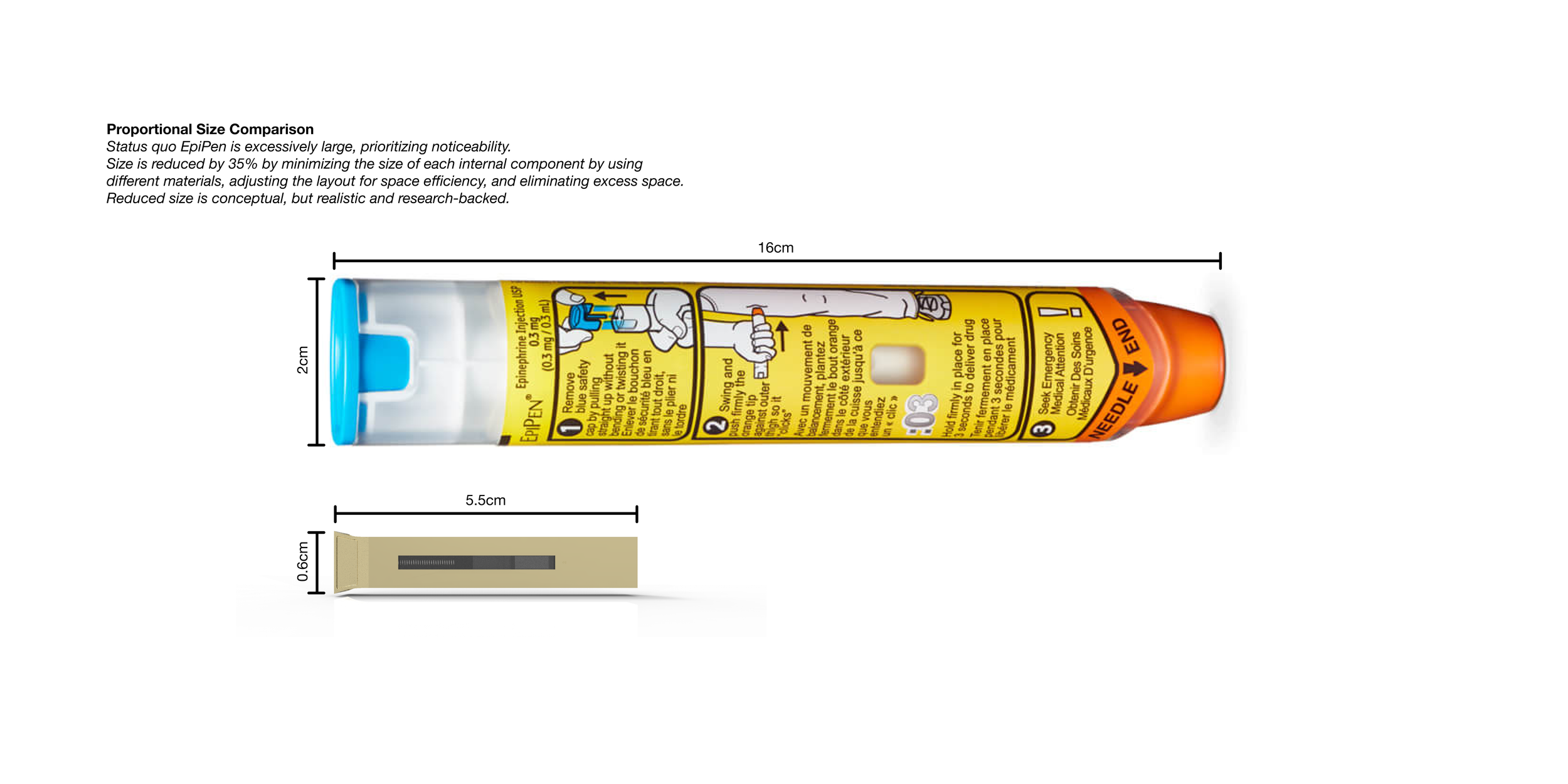
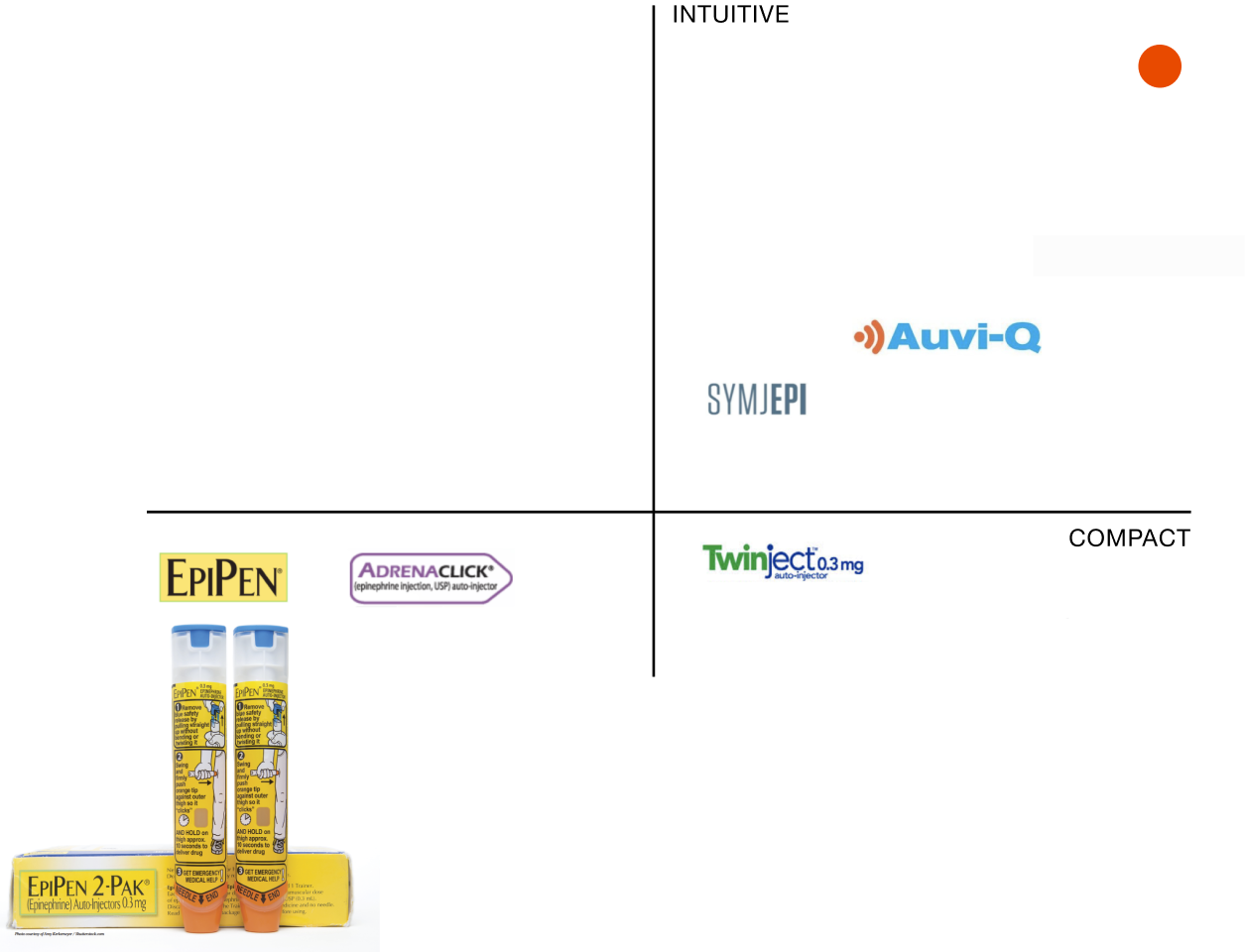
Technically, the EpiPen works. But it is bulky, inconvenient, and non-intuitive. The poor form leaves room for life-threatening user error. Or users simply choose not to carry it, because of the burdensome connotation. If a patient does not carry their EpiPen, it cannot save their life. The EpiPen is unacceptably wasteful and over-priced due to its inelastic demand.
There is an opportunity for an EpiPen that is compact, intuitive, affordable, and attractive. People who need it should want to have it with them.
Target audience: Individuals age 15+ who have anaphylaxis-inducing allergies.
2
Ideation
How might we make the device easier to carry?
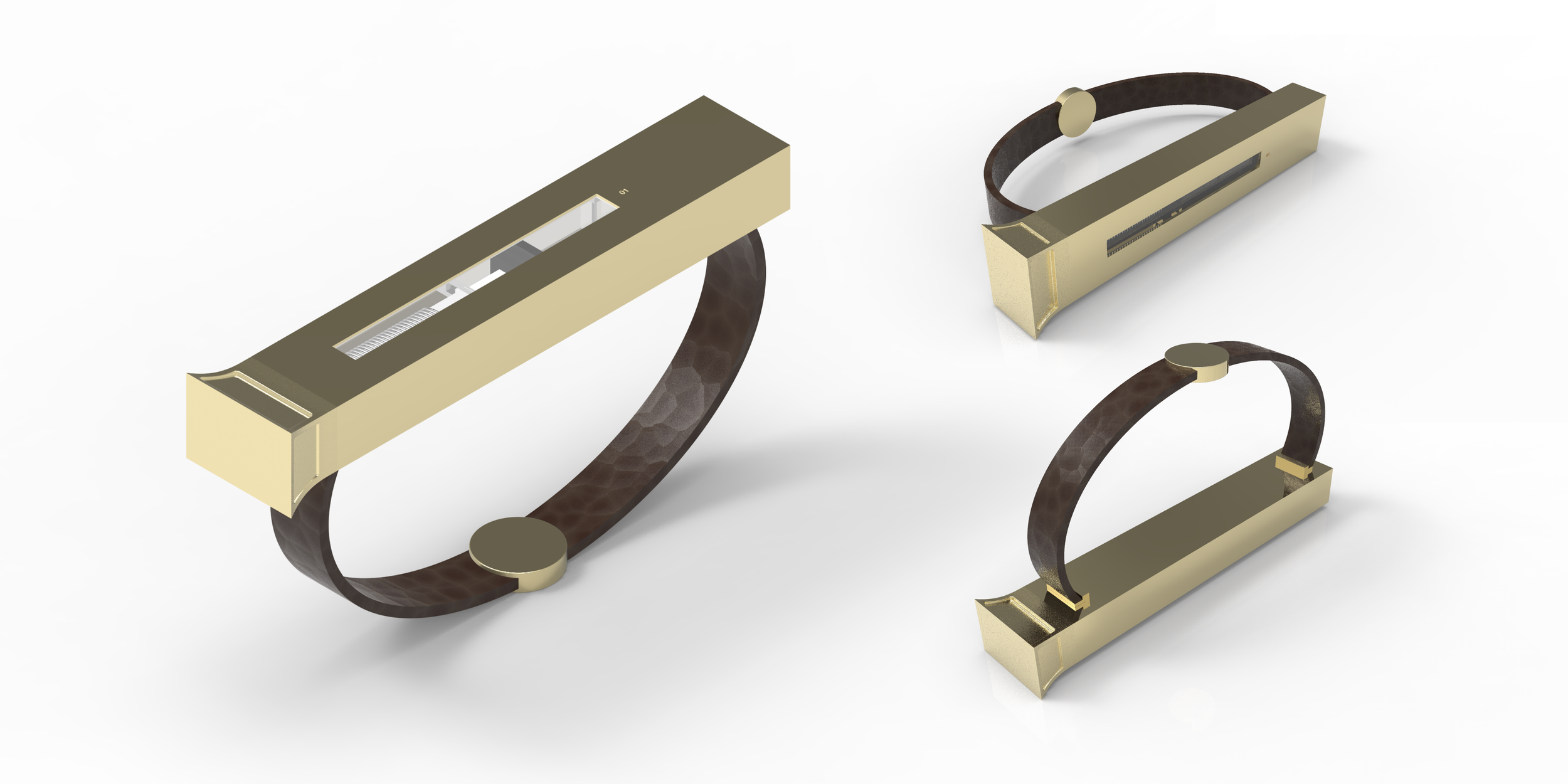
What if the autoinjector was a wearable device?
What if there was nothing but the epinephrine?
What if we shrunk the needle?
How might we make the product LESS WASTEFUL?
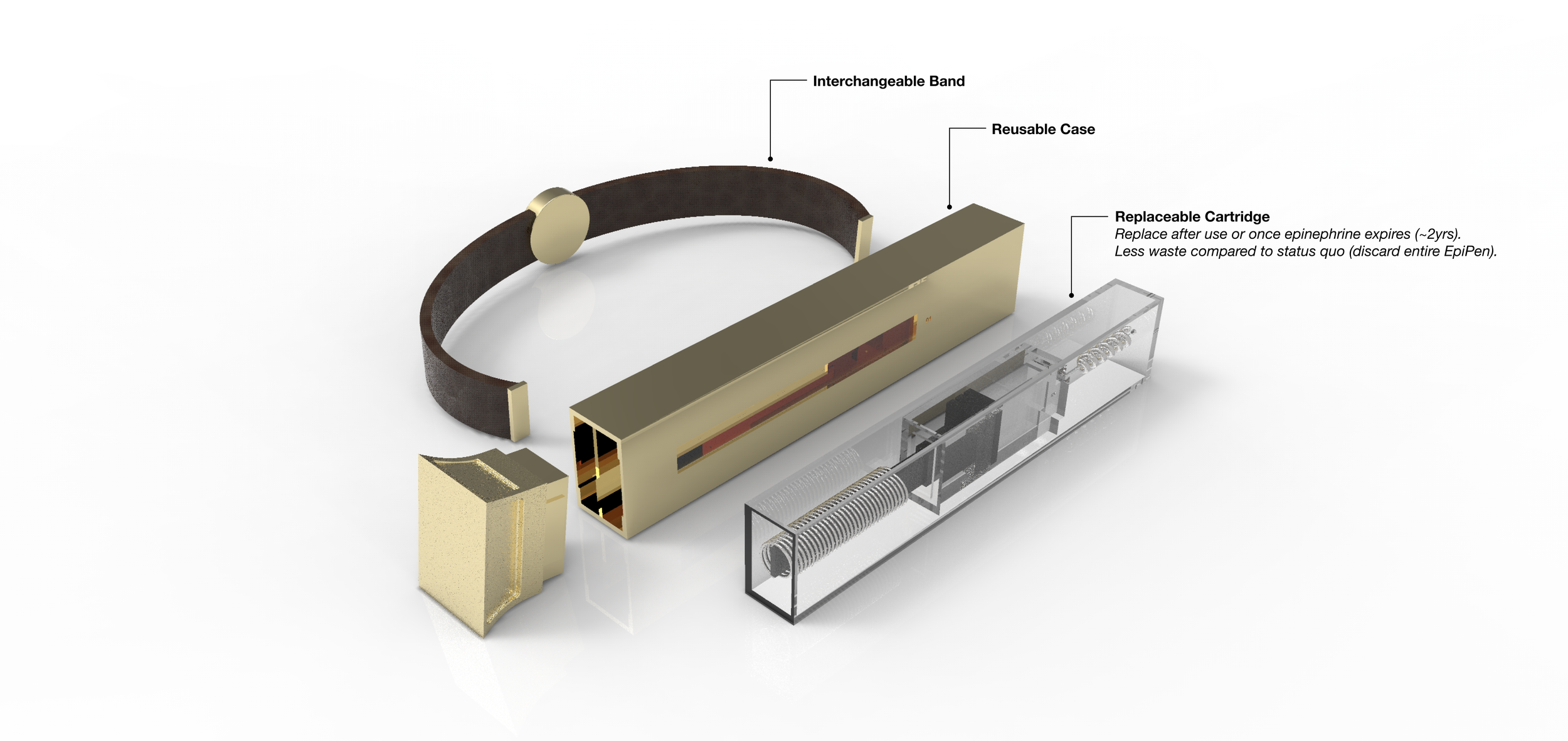
What if the medicine was held in reusable cartridges?
What if users only had to buy one autoinjector?
What if the needle was the only replaced component?
How might we REPLACE THE BURDENSOME CONNOTATION?
What if the form was unrecognizable as a medical device?
What if the device looked sculptural, or like jewelry?
What if we replicate the positive connotation of an adrenaline rush?
3
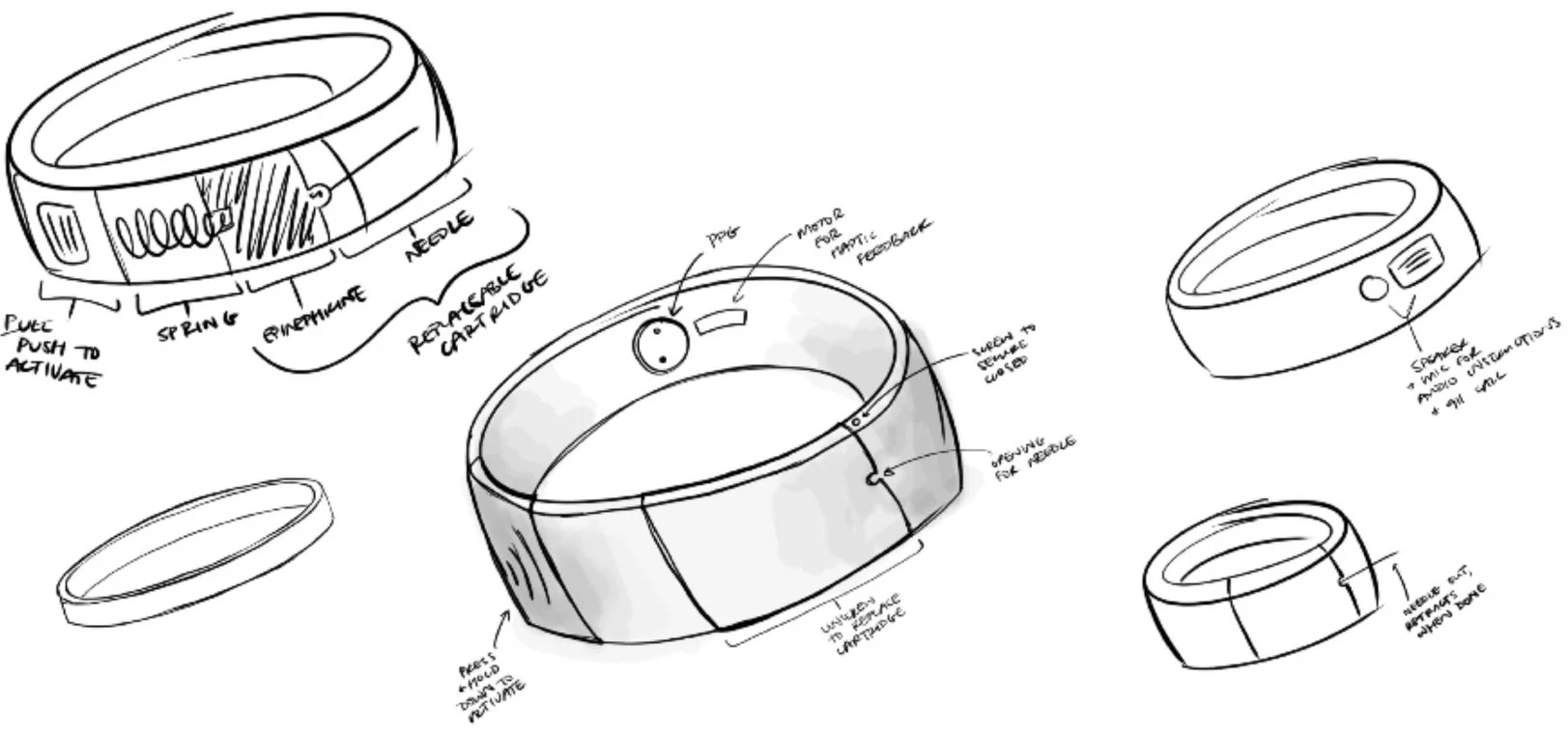
concept Sketches
4
LOW-RES PROTOTYPE

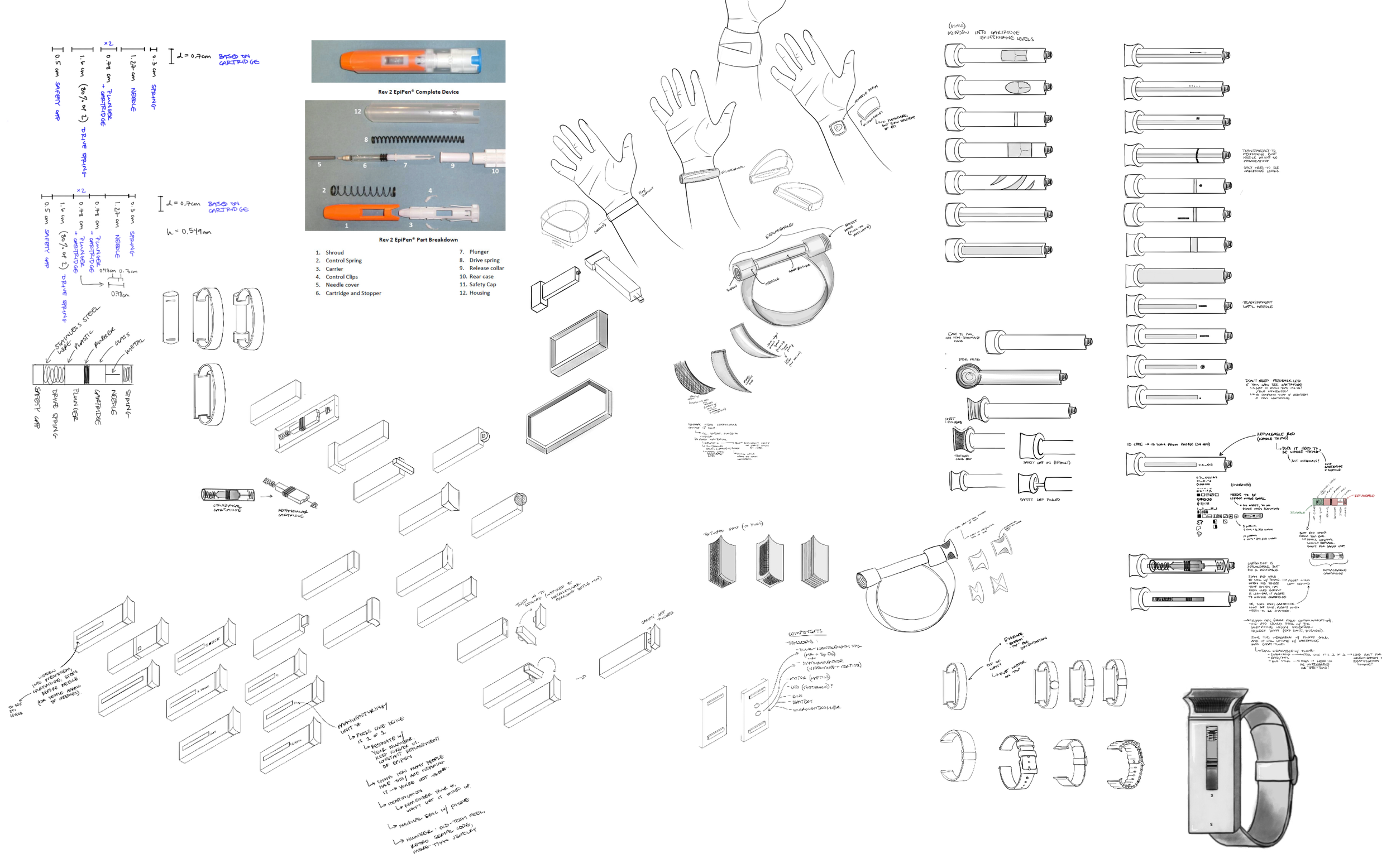
iterated sketches
5
Considering measurements, autoinjector mechanics, user experience, and aesthetics.
cad & rendering
6